Garage Door Weather Seal Replacement in Murfreesboro, TN
Daylight under the door, a wet strip on the slab after rain, leaves and mice getting in. New bottom, side and top seals fitted to the door and the floor you actually have.
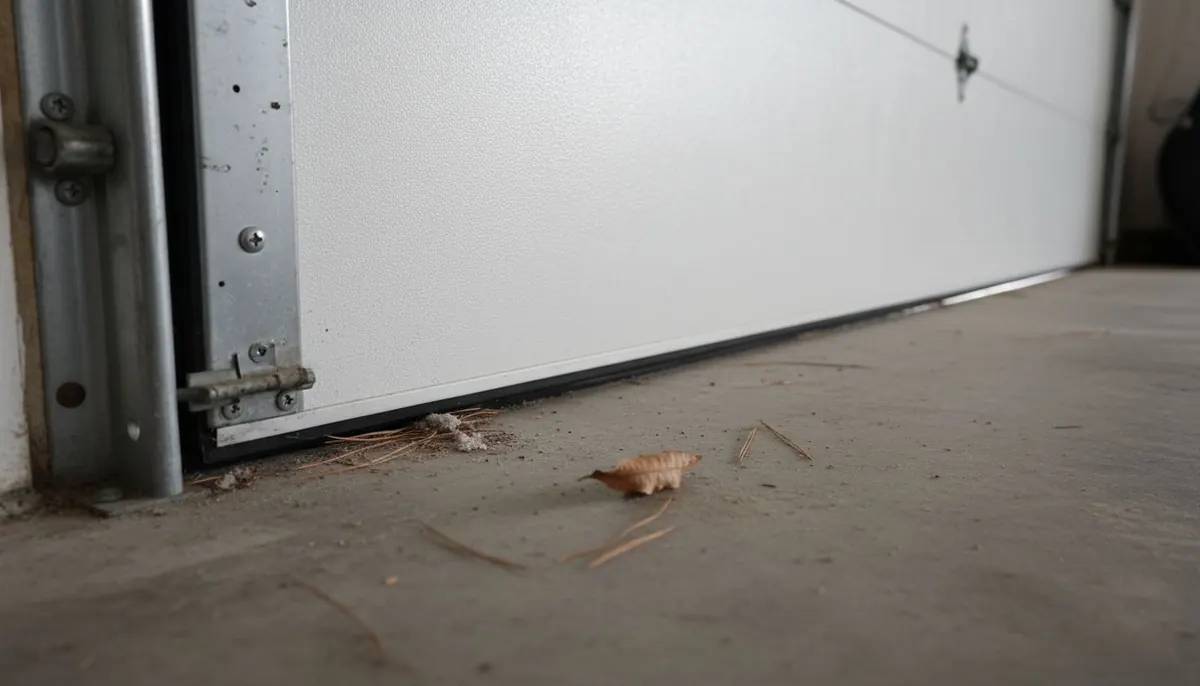
Garage door weather seal replacement in Murfreesboro, TN costs $100 to $200 for new seals on a typical door as of 2026, and $200 to $600 for a full perimeter job with a new bottom seal and new side and top stops, at $10 to $40 per linear foot for partial runs. The seals are the rubber and vinyl strips that close the gap between the door, the slab, the jambs and the header. Here they take a beating: 55.92 inches of rain a year, 4.6 inches in December alone, and a slab that freezes most nights from late November to late February. A hard, split or frozen bottom seal is why the garage floods along the front edge. We replace all three seal types in one visit, fit a threshold where the floor is not flat, and look for a rusting bottom section while we are down there.
Request a Garage Door Repair Quote
Tell us what the door is doing, whether it is a single or a double, and the part of town you are in. Weekday requests get a reply the same working day, and the price is confirmed on site before any work starts.
Seals We Replace on a Residential Door
Bottom Seal
The rubber strip along the lower edge, called an astragal, held in an aluminium retainer on the bottom section. It flattens against the slab when the door closes. Sun and ice harden it, and a hard seal cracks and lets water and light through.
Side and Top Stop Molding
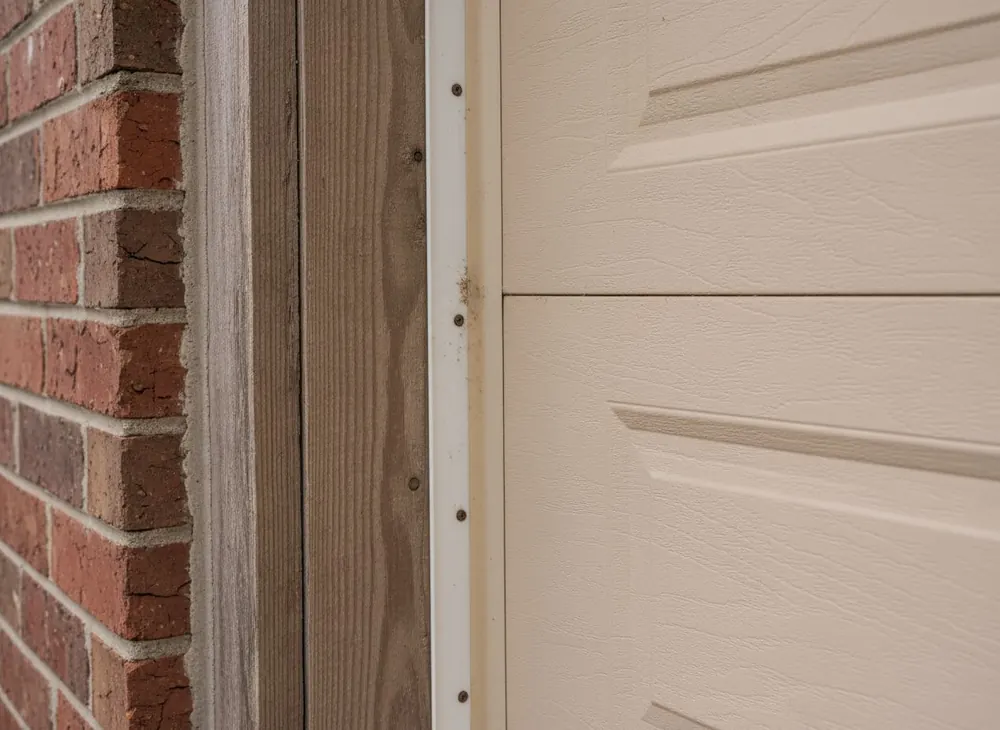
Vinyl stop with a flexible flap nailed to the jambs and header on the outside of the door. The flap presses against the door face and seals the gap around three sides. Old stop goes brittle and pulls away from the door at the corners.
Threshold Seal
A raised rubber strip glued to the slab under the door line. For a floor that slopes, dips or has settled, it gives the bottom seal a level surface to meet and keeps driven rain from running under the door.
Astragals, Stop Molding and Threshold Strips
T-end and bead-end bottom seals
Bottom seals are named for the edge that slides into the retainer: a T-end has a flat T-shaped bead, a bead-end a round one. The retainer on the door decides which fits, and the two are not interchangeable. We check the profile before cutting a seal to length, and replace a bent or corroded retainer.
Perimeter stop and the between-section seals
Stop molding seals the sides and top. Between the sections, the joints are shaped to shed water and some doors add a thin seal at each joint. Daylight at a section joint usually means a bent hinge or a section out of line, which is a hardware fix, not a seal fix.
How the seal relates to the rest of the door
The seal only does its job if the door closes square and the travel limit brings it fully down to the slab. A door that stops a fraction short, or sits crooked, will leak with a brand new seal. So a seal visit starts with the opener limits and the door balance, and a seal on a dented, rusted bottom section is a short-term fix we say so about.
Replacing a Seal in One Visit, Step by Step
-
Measure the gaps with the door down
We close the door and look for light at the bottom, sides and top, measure the width and height of the opening and check whether the slab is level under the door line.
-
Strip the old seals and clean the surfaces
The old astragal slides or is cut out of the retainer, the old stop is pried off the jambs, and the retainer and jambs are cleaned so the new material seats flat.
-
Fit the new bottom seal, stop and threshold
The new seal is cut to width and fed into the retainer, the stop is nailed to the jambs with the flap pressed to the closed door, and a threshold is set in adhesive if the floor needs it.
-
Close it and check the light
With everything fitted we close the door, check for daylight again and confirm the opener travel limit brings the seal down onto the slab or the threshold without over-compressing it.
Garage Door Bottom Seal for an Uneven Floor, Frozen Slabs and 56 Inches of Rain
When the floor is not flat
Slabs slope toward the drive on purpose and settle unevenly over time, so a straight bottom seal meets a floor that is high in the middle and low at one corner. The first answer is a deeper bulb-type bottom seal, which compresses further where the floor is high and still reaches where it is low. Where the gap at one end is more than a seal can absorb, a threshold strip glued to the slab brings the floor up to the seal instead, and puts a lip in front of water running down the drive. We measure the gap at both ends and the middle before choosing.
What a Murfreesboro winter does to a seal
The cold season runs November 28 to February 26 with a January average low of 31 F, so the slab freezes overnight and thaws by afternoon for three months. Water sitting in the bottom seal freezes and bonds it to the concrete; the next morning the opener tears the seal away from the ice, or the door stays stuck and the opener reverses. A seal already hardened by a hot season of 89 F July afternoons has no give left for that. The fix is a pliable seal fitted in autumn, a threshold where water pools, and a clean slab edge with nothing standing to freeze.
Rain, humidity and the bottom section
With 55.92 inches of rain a year and a muggy period of about 4.4 months, the bottom section of a steel door lives wet. A leaking seal lets water sit against the inside of the lowest panel and the bottom brackets, and rust starts there before anywhere else. We say so when we see it: a seal buys time on a sound section, and a rusted one is a panel replacement, $200 to $600 per section in published Middle Tennessee pricing, rather than a new strip of rubber.
Why Homeowners Call Us About Drafts and Leaks
The retainer profile is matched, not guessed
T-end or bead-end, we fit the seal the retainer takes, so it stays in.
The floor is measured before the seal is chosen
Seal depth or a threshold is decided from the gap at both ends and the middle.
Rust gets reported
If the bottom section is already flaking, you hear it before paying for a seal.
Weather Seal Questions
Why does water still come in under my garage door after a new seal?
Usually because the slab slopes or has settled, so the seal meets the floor at one end and not the other, or because the opener travel limit stops the door a fraction short. A deeper bulb seal or a threshold strip handles the first; a limit adjustment the second.
How long should a garage door bottom seal last here?
Less than in a milder climate. Murfreesboro has 55.92 inches of rain a year, 89 F July highs that harden rubber, and three months of nightly freezes that bond the seal to the slab and tear it on the first lift. Check it every autumn: if it is stiff, cracked or no longer touches the floor along its full width, it is due.
Can I replace the weatherstripping myself?
The bottom seal and stop are homeowner-replaceable if you can match the retainer profile, cut cleanly to width and work safely on a ladder for the top stop. Professionally it runs $10 to $40 per linear foot. What a DIY swap misses is why the old seal failed: a door sitting crooked, a travel limit set short, or a bottom section already rusting behind the retainer.
Will new seals make the garage warmer?
They stop the draft, which is what you feel, and they stop water and pests. They do not insulate the door itself. If the garage shares a wall or ceiling with living space, seals are the cheap first step and a foam-filled insulated door is the second.
My door freezes to the floor in January. What stops that?
A fresh pliable seal, a dry slab and no standing water in front of the door. The January average low here is 31 F, so meltwater in the seal refreezes overnight. A threshold strip keeps runoff from pooling under the door line. If it does freeze, pull the release cord and free the door by hand rather than letting the motor tear the seal.
Work That Goes With a New Seal
A rusted bottom section is what a leaking seal leaves behind, and the fix is a new panel.
A yearly service visit checks the seals along with the springs, rollers and safety tests.
Insulated door constructions are the next step when sealing the gaps is not enough for an attached garage.
Door Stuck? Tell Us What It Is Doing
A door that will not lift, hangs crooked, or stops a few inches off the floor is usually one failed part. Call during posted hours or send the symptoms and we will come out, name the part, and put an itemized price in front of you before we touch it.