Garage Door Sensor Repair in Murfreesboro, TN
The door starts down, stops, goes back up and the opener light blinks. Nine times out of ten that is the photo eyes. We realign, rewire or replace them and test the reversal.
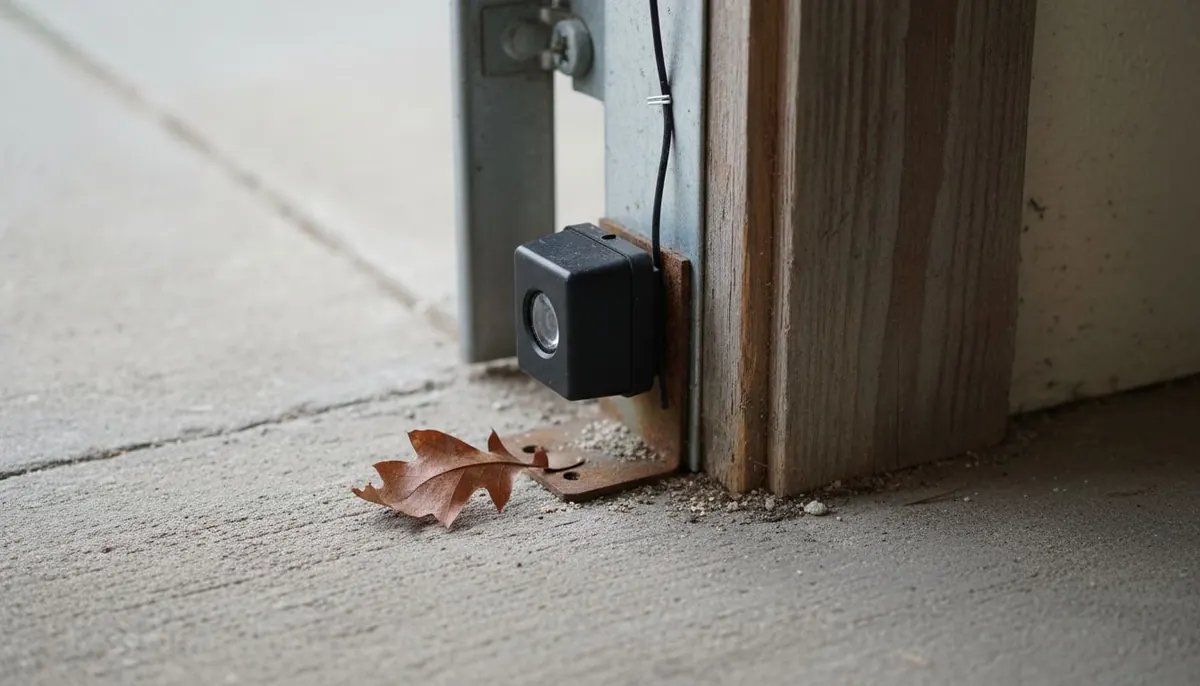
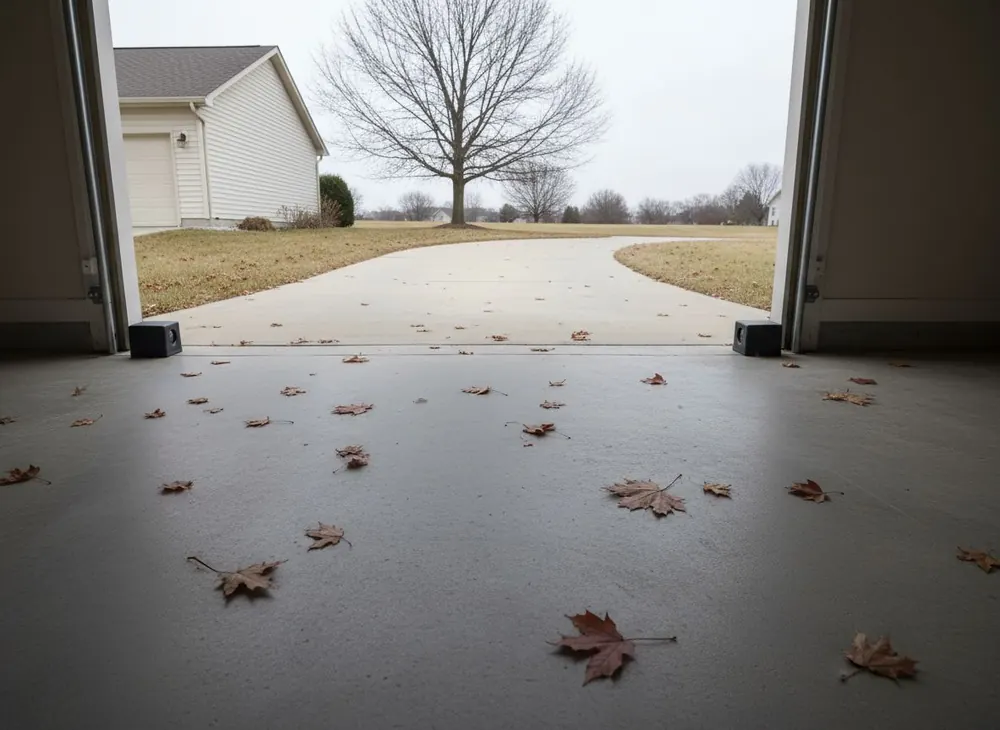
Garage door sensor repair in Murfreesboro, TN gets a door closing again when the photo eyes have been knocked out of line, wired badly, blinded by sun or killed by water. The two small sensors near the floor on each side of the opening send an invisible beam across the door path. If that beam is broken or missing, the opener refuses to close the door. The repair is to put the beam back.
Most sensor calls are finished in one visit: eyes realigned and re-secured, a damaged wire repaired, or a new matched pair fitted and tested. If the fault turns out to be inside the motor head rather than at the eyes, that moves into opener repair and we say so before doing anything more.
Request a Garage Door Repair Quote
Tell us what the door is doing, whether it is a single or a double, and the part of town you are in. Weekday requests get a reply the same working day, and the price is confirmed on site before any work starts.
What a Sensor Call Covers
Realignment and Remounting
The eyes get kicked, bumped by a trash can, or loosen on their brackets. We square them at the same height, tighten the brackets and confirm a steady signal on both sides.
Wiring Repair
The low-voltage wire from the motor head to each eye gets stapled through, chewed, or corroded at the terminals. We trace it, repair or rerun it, and re-terminate at the opener.
Replacement Pair
Cracked lenses, water inside the housing, or a sensor that will not light with good wiring means a new pair matched to the opener brand.
What the Sensor Lights Are Telling You
Every brand uses its own colours, so we read the lights against the manual for your model. These are the patterns that come up most.
One light steady, the other out or flickering
On most systems one eye sends and one receives. The sender stays lit whenever it has power; the receiver lights only when it sees the beam. A dark or flickering receiver points to misalignment, dirt on a lens, or sun on the receiving eye.
Both sensors dark
No light on either side means no power reaching them: a broken or shorted wire, a loose terminal at the motor head, or in some cases a fault on the opener logic board.
Lights fine, door still will not close
If both eyes show a good signal and the door still reverses, the problem is upstream: a travel or force setting, a rail obstruction, or the opener itself.
How a Sensor Repair Visit Runs
-
Confirm it is the sensors
We watch the door try to close, read the opener light pattern, and check both eyes.
-
Clean, align and secure
Lenses are wiped, brackets are checked for a loose screw or a bent arm, and the eyes are aligned until the receiver shows a solid signal, with the beam no higher than 6 inches off the floor per DASMA guidance.
-
Test the wire and the terminals
If alignment does not hold the signal, we check the wire run for staples through the jacket, splices gone green, and loose terminals at the motor head.
-
Replace if needed, then prove the reversal
A failed pair is replaced with a matched set for the opener brand. Before we leave, the door is closed with the beam blocked and must reverse, and the contact test is run in front of you.
The Standards Behind Those Two Little Eyes
Federal rule from 1993 onward: two layers of entrapment protection
The federal Safety Standard for Automatic Residential Garage Door Operators, 16 CFR Part 1211, applies to every residential opener manufactured on or after January 1, 1993. It requires primary protection, where a closing door must start reversing within 2 seconds of touching an obstruction, and secondary protection, the photoelectric beam that reverses the door when broken. An opener from before 1993 with no secondary protection is one we recommend replacing; see the opener installation page.
UL 325 and monitored sensors
Residential openers are listed to ANSI/CAN/UL 325, and the International Residential Code at R309.4 requires openers to be listed and labeled to it. Current editions require the entrapment protection to be monitored: the opener checks that the sensors are present and working before it will close. That is why you cannot simply unplug a broken sensor, and why a mismatched pair from another brand often will not be recognised.
Mounting height and the monthly test
DASMA Technical Data Sheet 364 sets the photo eye beam no higher than 6 inches above the garage floor; the Consumer Product Safety Commission puts it at 4 to 6 inches. The CPSC recommends testing every 30 days: block the beam while the door closes and confirm it reverses, then lay a 2 by 4 flat in the path and confirm the door backs off on contact.
What Sensor Repair Costs Around Murfreesboro
Garage door sensor repair: $125 to $300 per pair installed, as of 2026
National 2026 cost-guide ranges; no Murfreesboro-specific survey exists. Realignment is often the whole job.
| Scope | Typical range | What it covers |
|---|---|---|
| Realignment or wiring repair | $150 to $250 | Eyes cleaned, aligned and secured, or the low-voltage run repaired; reversal and contact tests included. |
| Replacement pair, installed | $125 to $300 | A matched sensor set for the opener brand, mounted, wired and tested. Parts alone run $25 to $100 a pair. |
| Sensor plus opener fault | $150 to $400 and up | When the eyes are fine and the logic board is not. Board replacement runs $150 to $400, quoted separately. |
What moves the price
- Whether alignment alone restores the beam.
- Length and condition of the wire run.
- Opener brand and age, which decides sensor compatibility.
- Sun exposure that needs shields or a sender and receiver swap.
- A diagnostic or trip fee of $50 to $75 is typical in the trade; ours is stated before the visit.
A door in a 2010 build in the Siegel area stops a foot from the floor and goes back up, opener light blinking. One sensor is dark, the bracket is bent from a bicycle. Straightening the bracket, re-aligning both eyes and running both safety tests sits at the low end of the $150 to $250 band. Water inside the dark eye would move it to the $125 to $300 replacement range.
Why Homeowners Call Us When the Door Will Not Close
We rule out the opener first
A door that reverses after touching the floor is a limit setting. A door that reverses in mid-air is the eyes.
Matched parts for your opener
Sensors are fitted as a pair for the brand on the ceiling. A mismatched set that is not recognised is a return visit.
Two safety tests, done in front of you
Beam-block reversal and the board-on-the-floor contact test are run before we pack up.
Photo Eye Questions, Answered Plainly
Why does my garage door go back up when I try to close it?
The opener thinks something is in the way. If the door reverses before it touches anything, the photo eye beam is broken, misaligned or not being received. If it reverses only after reaching the floor, the down travel limit or force setting is wrong.
Can I bypass the safety sensors to close the door?
Holding the wall button down will close most doors without the beam, because the standard treats a held button as constant-pressure control. That is for getting the car out once. Taping out the sensors defeats the secondary entrapment protection required on every opener made from January 1, 1993 onward. Get it fixed.
How high should garage door sensors be mounted?
No higher than 6 inches above the floor, per DASMA TDS 364, and the CPSC guidance says 4 to 6 inches. Both eyes must be at the same height and pointed squarely at each other; a bracket bent an inch is enough to stop the door closing.
Does sunlight really affect garage door sensors?
Yes. Direct low sun on the receiving eye can wash out the infrared beam, which is why some west-facing doors work all morning and fail at 5 pm. Swapping the sender and receiver, fitting a sun shield, or a small tilt of the receiver usually fixes it without new parts.
How often should I test the sensors?
Every 30 days, per the CPSC. Break the beam while the door closes; it should reverse at once. Then lay a 2 by 4 flat in the door path; the door should reverse on contact. If either test fails, use the door by hand until it is repaired. It is also part of a yearly maintenance visit.
Opener Work That Often Goes With a Sensor Fix
A logic board or travel-limit fault is the next suspect when the eyes test fine and the door still reverses.
Replacing a pre-1993 opener is the right call when there is no secondary entrapment protection to repair.
Remotes that stopped responding are a separate fault, but often get reported on the same call.
Door Stuck? Tell Us What It Is Doing
A door that will not lift, hangs crooked, or stops a few inches off the floor is usually one failed part. Call during posted hours or send the symptoms and we will come out, name the part, and put an itemized price in front of you before we touch it.